The Future of Web Design: Systems, Intelligence & The End of Static Websites
Categories:
Website Design & Development
Strategy & Positioning
Written by

Web design is no longer about how a website looks.
It is about how it performs, adapts, learns, and scales.
The next era of web design is being shaped by artificial intelligence, automation, immersive interaction, data systems, and privacy infrastructure. Brands that understand this shift will build durable digital assets. Those who don’t will redesign repeatedly without compounding growth.
The future of web design is not aesthetic evolution.
It is structural evolution.
Below are the forces you cannot afford to ignore.
1. AI-Native Web Design (Not Just AI Tools)
Artificial Intelligence is no longer a design assistant. It is becoming the foundation layer of digital infrastructure.
What’s Changing:
AI-assisted layout generation (Framer AI, Webflow AI, Wix ADI)
Real-time personalization engines
Predictive user behavior modeling
AI-driven CRO (conversion rate optimization)
Automated content refinement
The Real Shift:
AI is moving from creation tool to decision engine.
Future websites will:
Adjust layout dynamically based on user intent
Modify headlines based on referral source
Adapt CTAs based on engagement probability
Optimize conversion flow automatically
Why It Matters:
Static websites convert at static rates.
Intelligent systems compound performance.
Brands that integrate AI into infrastructure — not just content — will outperform.
2. Performance-First Minimalism
Design trends are cycling back to disciplined simplicity — but this time, driven by performance.
Why It’s Accelerating:
Core Web Vitals directly impact search visibility
Faster sites reduce bounce rates significantly
Users expect instant interaction
Overdesigned interfaces increase cognitive load
Minimalism is no longer aesthetic preference.
It is performance engineering.
What This Looks Like:
Strategic white space
Clear typographic hierarchy
Intent-driven layout structure
Reduced JavaScript dependency
Optimized media delivery
Why It Matters:
Speed increases trust.
Trust increases conversion.
Less friction = higher pipeline velocity.
3. Immersive 3D & Spatial Interfaces
Flat interfaces are evolving.
WebGL, Three.js, and spatial design frameworks are enabling:
Interactive 3D product models
Scroll-driven storytelling environments
Spatial UI layers
Web-based AR experiences
Why This Works:
Human cognition processes spatial interaction faster than abstract information.
3D environments:
Increase dwell time
Improve product understanding
Enhance brand memorability
Strategic Warning:
Immersion without purpose is distraction.
3D must serve clarity — not spectacle.
4. Voice & Conversational Interfaces
Voice search and conversational UX are reshaping interaction models.
Growth Drivers:
Smart assistants (Siri, Alexa, Google Assistant)
Hands-free search behavior
Accessibility standards
Natural language processing advancements
Structural Implications:
Websites must:
Optimize for conversational queries
Implement structured data
Anticipate long-tail voice search patterns
Design content for semantic understanding
Why It Matters:
Search behavior is shifting from keywords to intent statements.
Your architecture must follow.
5. No-Code & Systemized Development
The barrier to building is collapsing.
Platforms like:
Framer
Webflow
Bubble
Shopify Hydrogen
Are enabling rapid iteration and deployment.
But the advantage is not speed alone.
It is structured iteration.
Strategic Advantage:
Faster prototyping
Reduced dev cycles
Integrated analytics
Automated deployment pipelines
The brands that win will not be those who “design fast.”
They will be those who iterate intelligently.
6. Micro-Interactions & Motion Intelligence
Micro-interactions are evolving from decorative animations into behavioral feedback systems.
Advanced Applications:
Scroll-based interaction mapping
Predictive hover states
Motion tied to conversion milestones
Real-time form validation feedback
Subtle motion improves:
Perceived speed
Emotional engagement
Usability confidence
When done correctly, users don’t notice motion.
They feel it.
7. Personalization Engines & Behavioral Design
Generic websites are becoming obsolete.
Modern users expect contextual relevance.
Emerging Standards:
Dynamic content blocks
Geo-based messaging
Referral-source segmentation
Behavioral retargeting integration
CRM-synced personalization
Websites will increasingly operate as:
Revenue filters.
Not digital brochures.
The more your system understands user intent, the more efficient your conversion architecture becomes.
8. Sustainable & Efficient Web Architecture
Digital carbon footprint is no longer theoretical.
Heavier websites:
Consume more energy
Require more server processing
Slow down user devices
Sustainable design includes:
Image compression systems
Lazy loading architecture
Efficient hosting infrastructure
Reduced third-party script dependency
Efficiency is no longer optional.
It is operational discipline.
9. Mobile-First → Mobile-Primary
Mobile traffic is dominant.
But the shift is deeper than responsive layouts.
What’s Changing:
Gesture-based navigation
Thumb-zone optimization
Adaptive typography systems
Progressive Web Apps (PWAs)
Offline caching
Mobile is no longer a secondary consideration.
It is the default architecture layer.
10. Privacy-First Infrastructure
User trust is now a competitive advantage.
With increasing regulations (GDPR, CCPA, global compliance standards), web design must embed:
Transparent consent systems
Secure encryption
Minimal data collection policies
Clear privacy communication
Secure authentication layers
Trust compounds.
Security is part of brand authority.
Conclusion:
The future of web design is not trend-based.
It is intelligence-based.
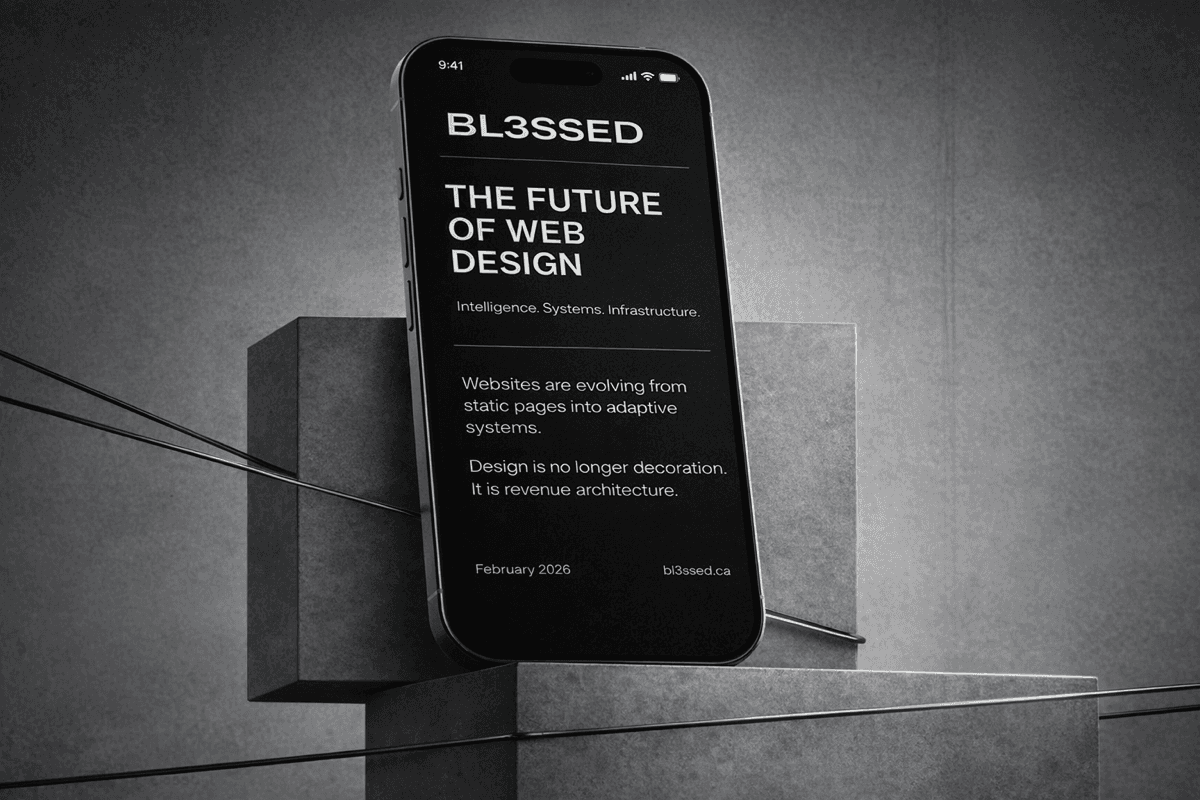
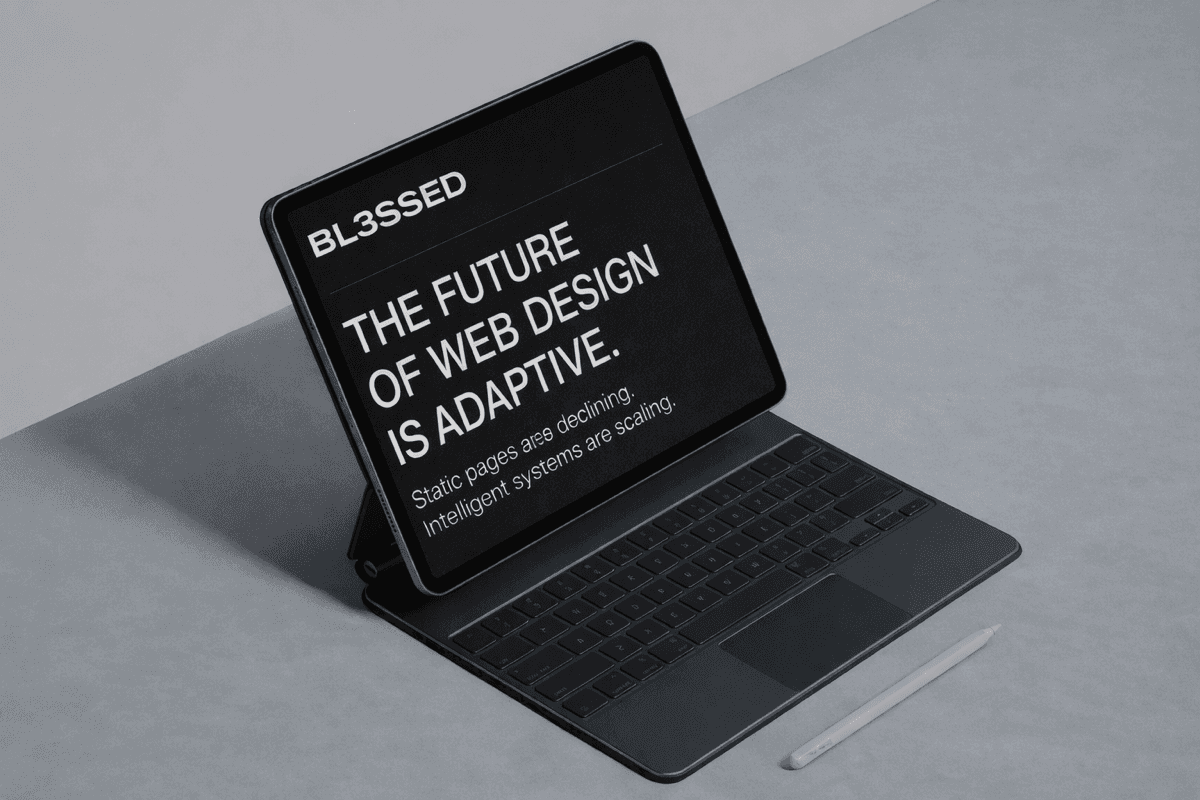
Websites are evolving from static pages into adaptive systems.
From decoration into infrastructure.
From presence into performance engines.
Brands that treat their website as a strategic asset — powered by AI, structured data, personalization, and performance discipline — will scale.
Those who treat it as visual identity alone will rebuild repeatedly.
The question is no longer:
“What does your website look like?”
It is:
“How does your website think?”